A book by Jeannette Michels

People aren't users.

Five letters where a person used to be

They are patients.

There is a word at the center of almost every system built to serve people in the last fifty years. It decides why the hold music plays, why there is no number to call, and what the AI deciding your loan sees when it looks at you. The word is user. This book is about getting your name back.

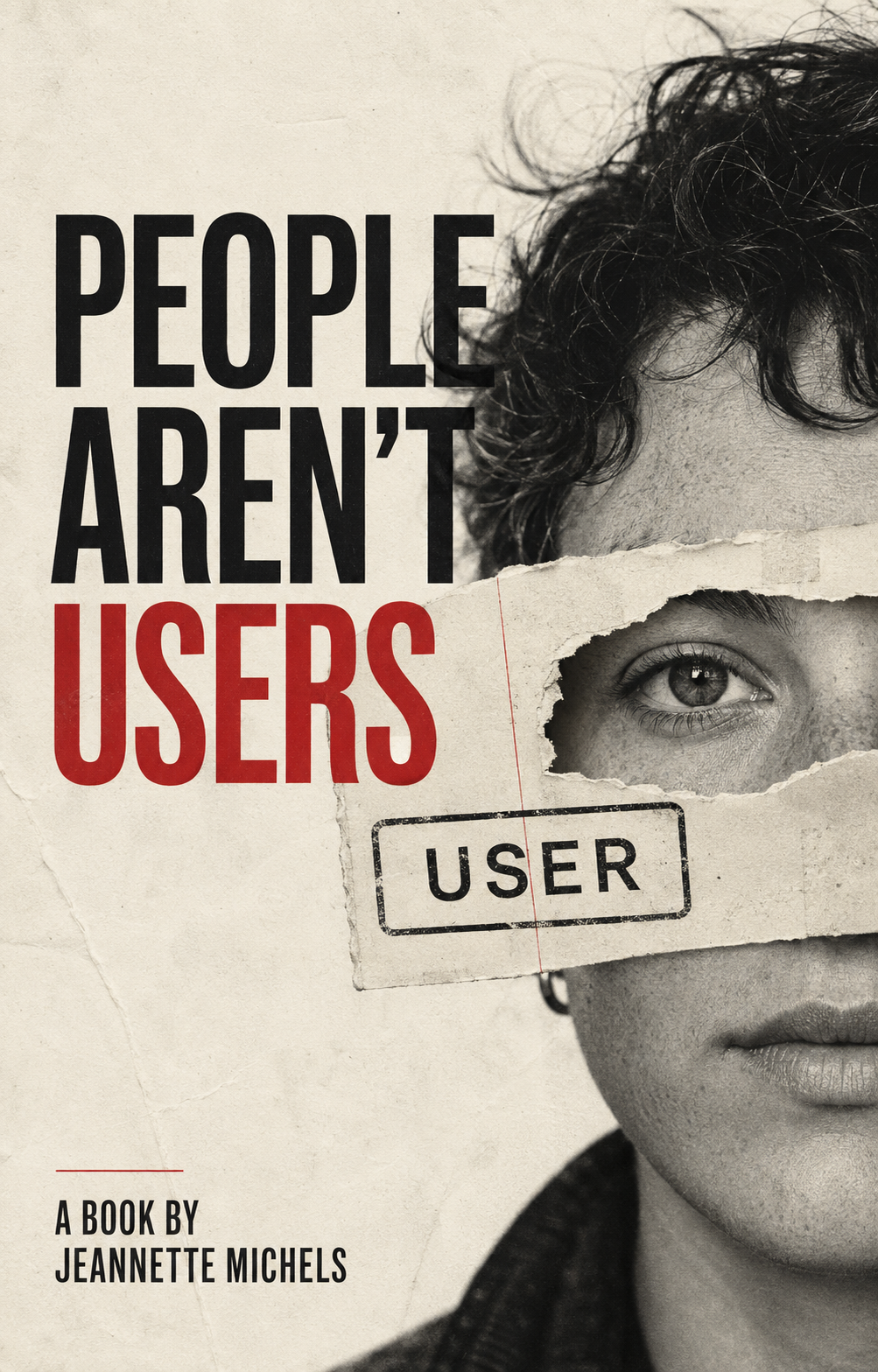
A torn-paper portrait revealing a person's eye beneath the label user
patientnotuserstudentnotuserparentnotuserperson

A word, not a conspiracy

“Only two industries call their customers users: illegal drugs and software.”Edward Tufte

In November 1961, at MIT, four trained specialists shared time on a single mainframe, and the system needed a word for them. It called them users. The word was exactly right for what it described. Then computing left the lab, and the word rode along in the documentation, from personal computers to the internet to the phone in your pocket, gaining reach at every step. Nobody debated it. It was already in the manual.

A user is not a person. A user is a behavior inside a system. Call someone a user and you have already decided what you owe them: not their history, not their context, only their conduct inside your walls. That is why your call is very important and nobody answers it. That is why the most sophisticated machines in history say your name to your face and call you a user behind your back.

The book follows the word from that lab into the care facility, the quarterly review, the vendor room, the exam room, the school portal, and the AI systems now deciding who gets the loan, the job, and the surgery. It is not a tech takedown. I work in tech. I have said the word without flinching. It is an argument that the frame is a choice, and a fifty-year-old choice can be changed by anyone who notices it.

Roslyn's room.The quarterly review.My kitchen table.The same architecture every time, just different walls.

You Were Renamed

“There are no ordinary people. You have never talked to a mere mortal.”C.S. Lewis, The Weight of Glory

Somewhere along the way, you were renamed. Nobody asked.

It happened the last time you needed help with something ordinary. Changing a plan. Fixing a bill. Something that should have taken five minutes. You found the number and called it, and what followed was so familiar you have probably stopped being surprised by it. The menu. The options that did not fit your situation. The hold music, that genre engineered to tell you, without quite saying so, that your time is worth nothing. The voice breaking in every ninety seconds to say your call was very important.

It was not. If it were, someone would have answered.

You waited seventeen minutes. You explained yourself to someone who could not help you. You were transferred. You were disconnected. You called back and started over, from the top, with a new person who had no record that you had already done all of this once. And somewhere in there you stopped feeling angry and started feeling something smaller, like you did not quite exist to the system you were trying to reach.

That feeling has a cause. This book names it.

Read the full chapter


Thirty years of seeing what systems miss

Jeannette Michels
Jeannette Michels
Bend, Oregon

I trained in clinical psychology and behavior analysis. The training handed me a clipboard in a care facility in Reno, where I measured how long a woman named Roslyn stayed seated. I recorded the behavior the system asked me to record and never asked where she was trying to go.

I was doing the job correctly and still missing the person.

From there I became a school counselor in Culver City and a family support specialist in Seattle. I founded IntegriTeach, which built online professional development for teachers and counselors, and watched a mission I believed in become a set of completion rates. Then I co-founded PackIt and helped turn a kitchen-table idea into a patented consumer category.

By every conventional measure, PackIt was a success. I still remember sitting in a Target vendor room and hearing the families we had built the product for discussed in the language of repeat purchase and retention. The language was ordinary, efficient, and so familiar that no one had reason to question what it left out.

BuiltPackIt

Co-founder of a patented consumer category carried in more than 7,000 retail locations across more than 40 countries. Three-time Inc. 5000 company, No. 1 on Inc.'s list of the 50 fastest-growing women-led private companies in America, and recipient of more than 100 industry awards.

CreatedCX20 + EX20 + X20

Creator of three global research platforms that expose the distance between organizational confidence and lived experience. X20 brings the 20-gap framework to AI through a new study of approximately 1,000 business leaders and 2,000 customers and employees worldwide.

LedGlobal strategy

Advised HP, New Balance, Citi, Disney, Nike, and ASICS before leading global marketing strategy, insights, and analytics for experience design and digital engineering across more than 50 countries.

SpokenTEDx + universities

TEDx Constitution Drive, UCLA Anderson School of Management, USC Marshall School of Business, and stages across the industry. Published and featured in Inc., CX Scoop, and C-Suite Quarterly.

Corporate work gave me a more sophisticated vocabulary for the same disappearance. A person became a user, a subscriber, an account, a case, a claim, a conversion, a churn risk. Even the good words, patient, passenger, member, the ones with a person still inside them, hollowed out once the system began measuring them instead of seeing them. Each label could be accurate and still incomplete. The problem began when the system forgot the difference.

Today I lead global marketing strategy, insights, and analytics for Amdocs' Experience Design and Digital Engineering business. The latest CX20 study included nearly 3,000 business leaders and consumers across 14 countries. Eighty percent of business leaders said their companies were meeting customer expectations. Only 24 percent of customers agreed. That 56-point gap measures how far an organization's story can drift from the experience of the people it serves.

X20 extends that work to AI. It asks what happens when technology enters the same organizational gaps people were already living inside.

I gave a TEDx talk called It's My Neighbor's Fault, and I have spoken about this work at UCLA's Anderson School of Management, USC's Marshall School of Business, and on stages across the industry. Afterward, people find me and say some version of the same thing: I have felt this my whole life. I never heard anyone say it out loud.

People Aren't Users grew from the question I failed to ask Roslyn, and from every version of that omission I have met since. It is about what organizations stop seeing when the role becomes the whole person, and what changes when someone finally looks up from the clipboard.

Jeannette Michels and PackIt co-founder Melissa with Martha Stewart holding a PackIt lunch bag
01The PackIt years, with Martha Stewart.
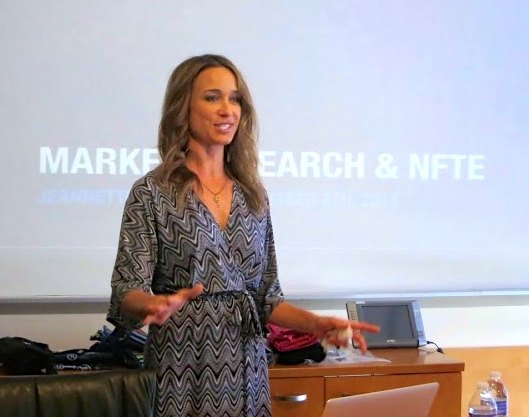
Jeannette Michels teaching a market research session for NFTE
02Teaching market research with NFTE.
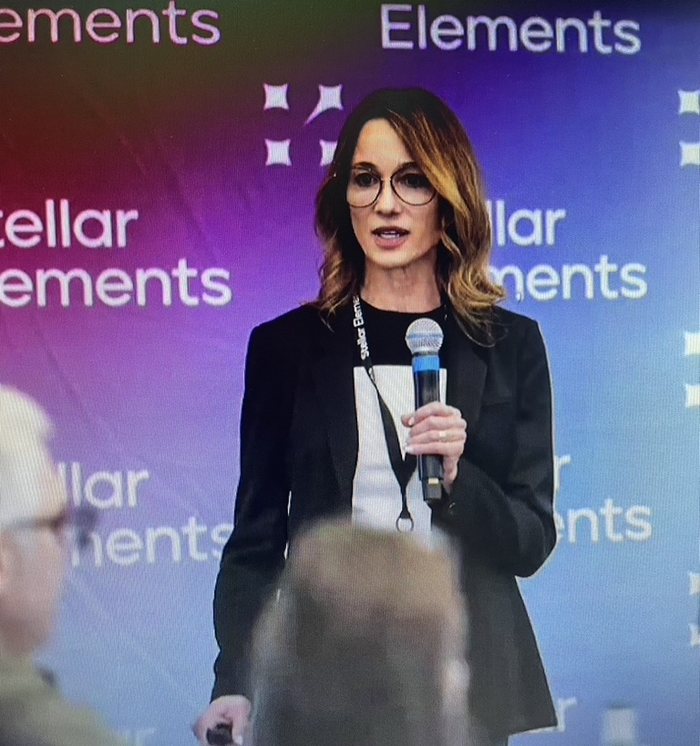
Jeannette Michels speaking on stage with a microphone
03Speaking at a Stellar Elements event.

Read Chapter One

Leave your email and I'll send you the full opening chapter, and one message when the book has a date. That is the whole arrangement. No drip sequence. No re-engagement campaign built to hit you hard in the first seven days. You are not a cohort.